



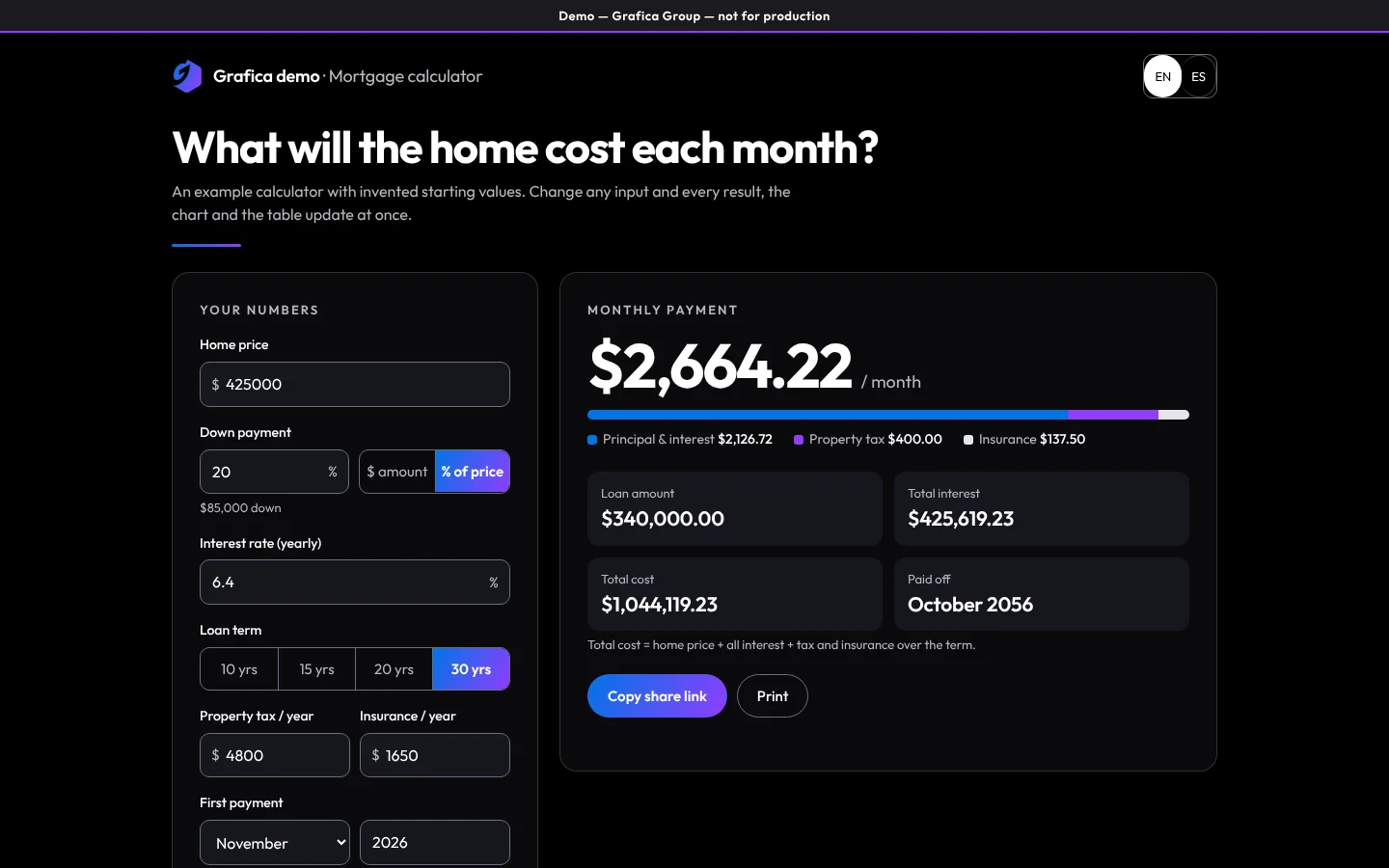
Click into the interest-rate field of a calculator, keep the cursor there, and turn the mouse wheel to read further down. On our rental profit projector, on 5 October 2026 in Chrome, one notch of the wheel took the rate from 6.5 to 6.375 and the projected return from 10.14% to 10.37%. Nothing was typed.
We had found and fixed that defect in our mortgage calculator while building it. The projector went public on 5 October without the fix, and we found that out while writing this note. The projector got the fix that same night. If your agency ships calculators or quote forms with number fields, it is worth a minute to find out whether a client’s site does the same in Chrome. We have not tested anyone else’s.
Work finished: 6 October 2026 · Written: October 2026
A calculator on a website looks like a small job. Someone types a price and a rate, and a number comes back. The visitor then takes that number to a lender or into an offer on a house. If it is wrong by a little, nobody sees it on the page.
On 5 October we published two of ours on grafica.group: a mortgage calculator and a rental profit projector. Both are demos with invented figures, and they sit with the rest of our demos at grafica.group/demos. This note is about what we checked, before and after they went up.
The wheel that changed a figure
One of the defects fixed during the build of the mortgage calculator: the mouse wheel changed a number field that had focus.
On the page as first built, in Chrome, a focused number field took a turn of the wheel as one step up or one step down. A visitor who clicks into a field and then turns the wheel to read on has changed an input without knowing, and the results that depend on it have changed with it.
The fix: when the wheel turns over a focused number field, the field gives up focus, and the wheel scrolls whatever it would have scrolled anyway. The check is this. Click into a number field, keep the cursor over it, turn the wheel, and read the value. The value must be the same. If there is anything to scroll, the page, or the panel the field sits in, will have moved. During the build we ran the same check against the page without the fix and watched the value change by one step.
On 5 October we repeated it on both public pages, in Chrome, on the interest-rate field. The mortgage calculator held: the rate stayed at 6.4 and the page scrolled. The projector did not: that is the reading this note opens with. The projector got the same fix that night, 5 October 2026. The next morning we repeated the check on the public page in Chrome: the rate stayed at 6.5 and the inputs panel scrolled. A bare number field in the same browser, same run, still dropped to 6.375.
The math, checked a second way
The mortgage calculator builds its schedule month by month. Running it and looking at the result would prove only that the code agrees with itself.
So the check takes the math out of the page file and compares its results with the closed-form formulas for a loan payment and a remaining balance, which reach the same figures by another road. A separate check confirmed, the night the calculators went public, that the file was the one being served. Sixty cases, 3,825 values, no mismatch, the largest difference a fraction of a cent. The formulas are anchored to a known figure: 200,000 at 6% over 30 years is 1,199.10 a month.
Then we moved one expected value by one cent, and the check failed.
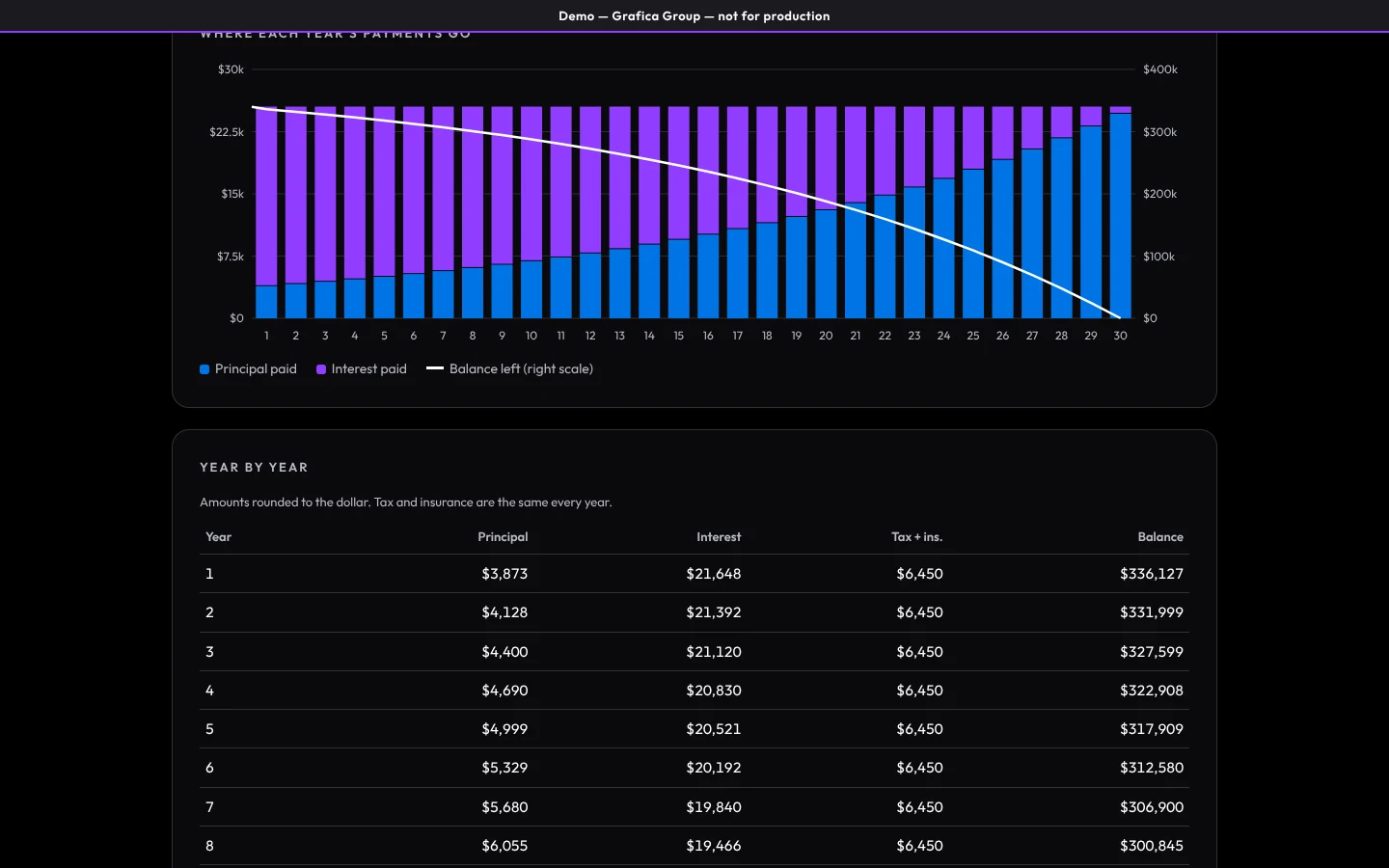
The projector has more moving parts: vacancy, taxes, depreciation, a sale at the end, a rate of return. Its check runs sixty cases and solves the rate of return a second, independent way. At one point the check reported 31 mismatches. Every one was the second solver’s error or the test’s, not the page’s. With the solver replaced, the check passed on all 7,081 values.
Lead forms, and what they say
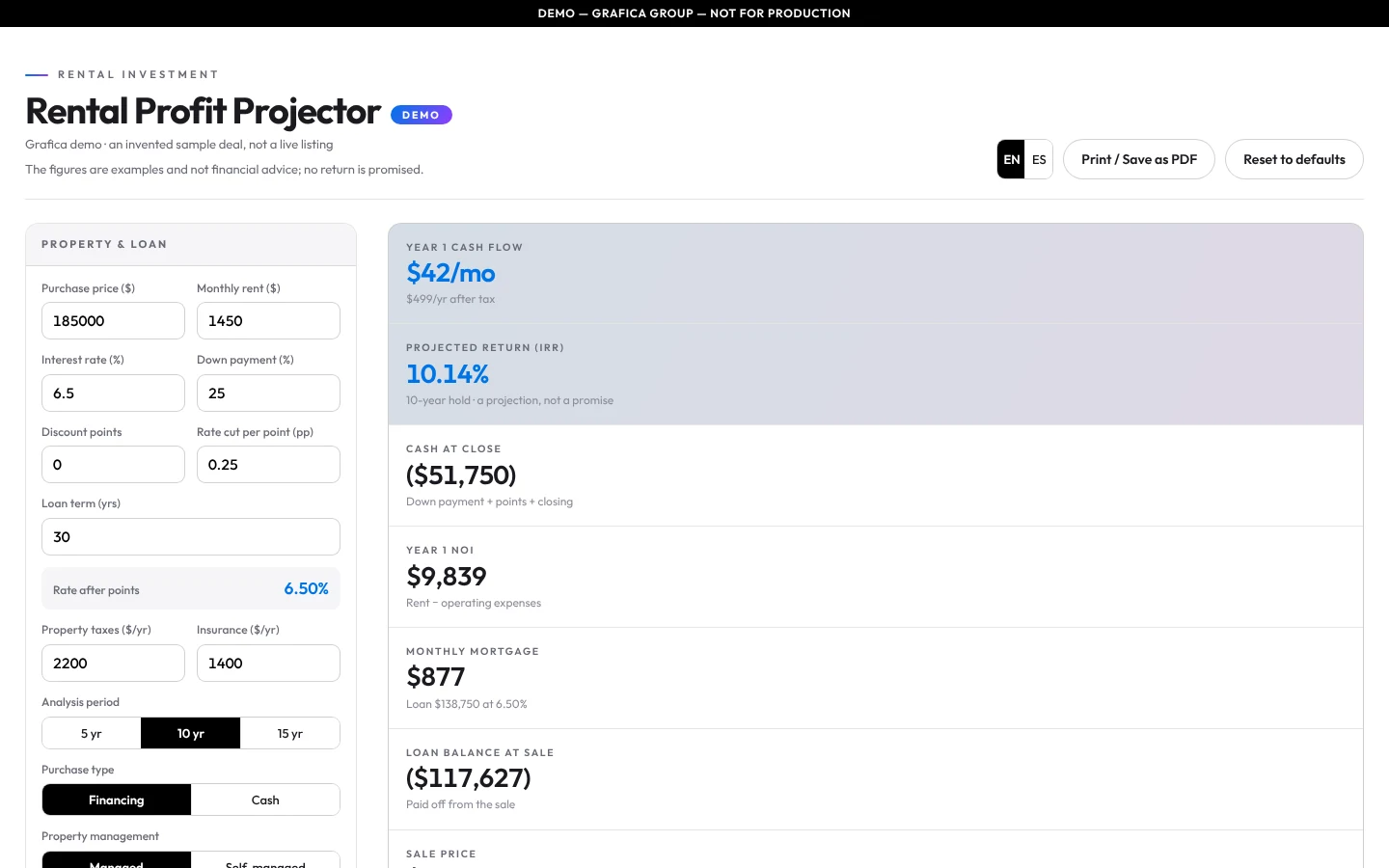
Both pages have a place where a live site would capture a lead. Neither sends anything: we pressed both buttons and watched the network, and no request left the page. The projector’s form says that in this demo it is wired to nothing. The mortgage calculator’s form is switched off on the public page. Switched on, it asks for a name and an e-mail before it shows the year-by-year table, and says in one line that it sends nothing and stores nothing.
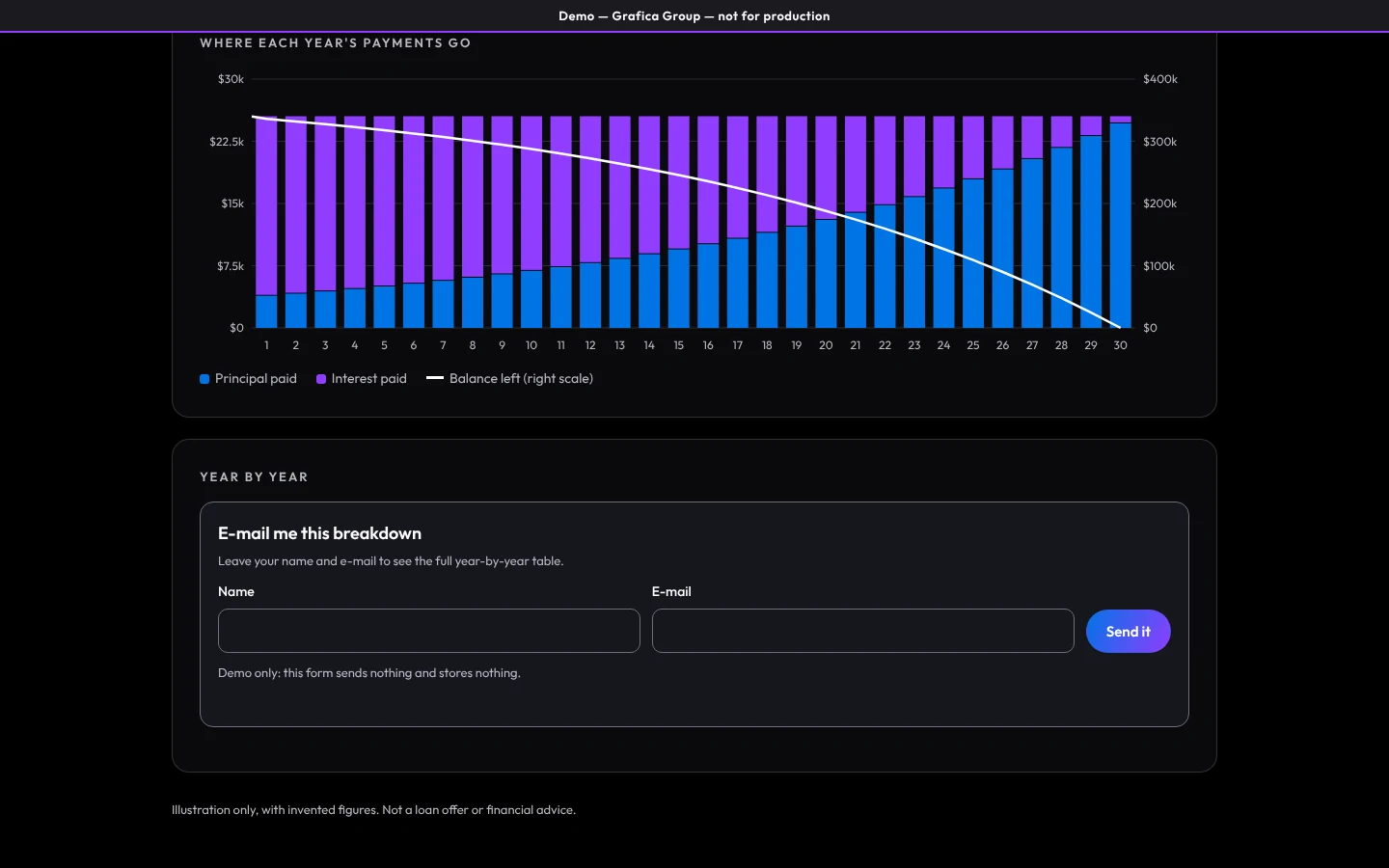
Each page also says what it is. The mortgage calculator: an illustration with invented figures, not a loan offer or financial advice. The projector: examples, not financial advice, and no return is promised. What the checks show is narrower: the mortgage calculator’s payments and balances match the closed-form formulas, and the projector’s rate of return matches a second, independent solver.
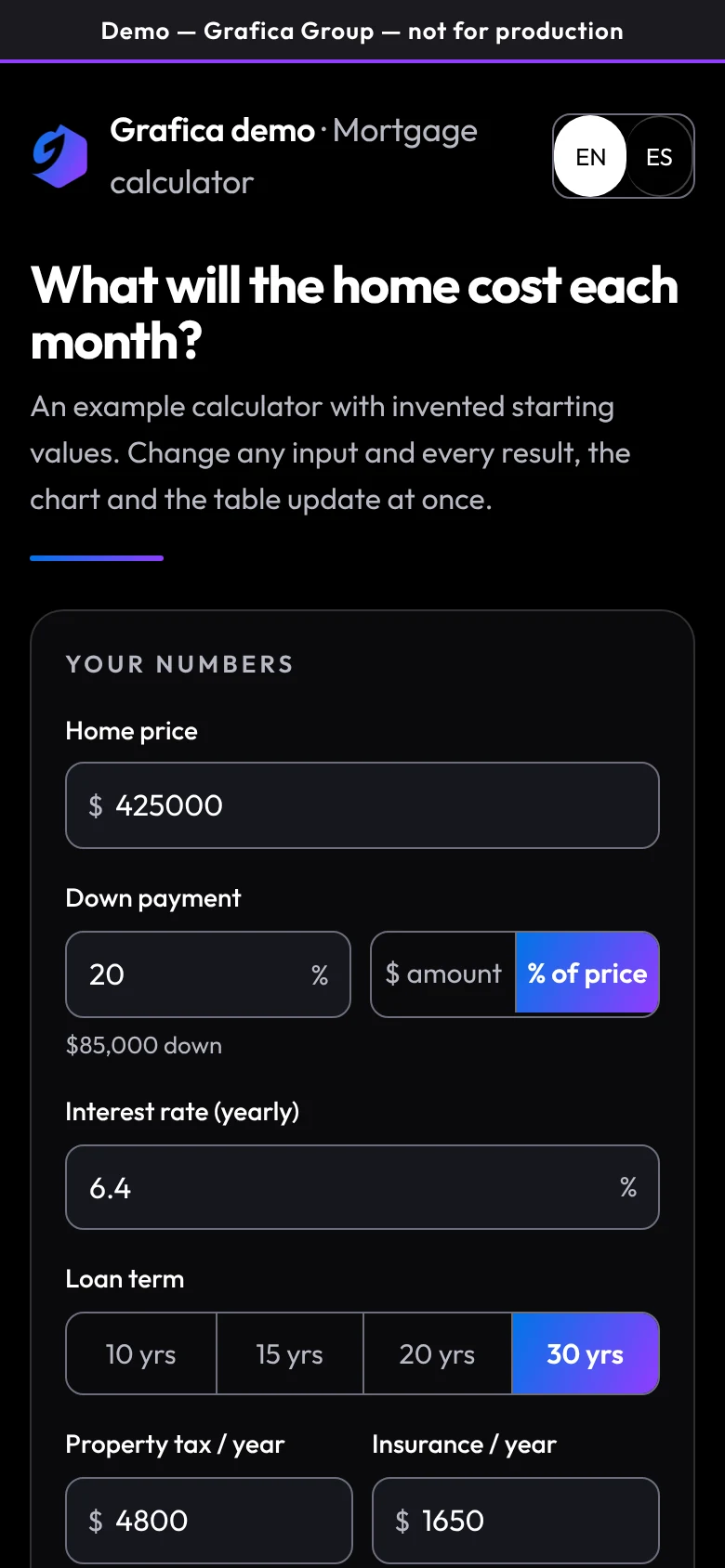
Does a calculator on a client’s site pass this check? Open our mortgage calculator in Chrome, click into the interest-rate field, keep the cursor over it and turn the mouse wheel. The rate stays at 6.4 and the page scrolls. Then do the same on a number field on theirs.